

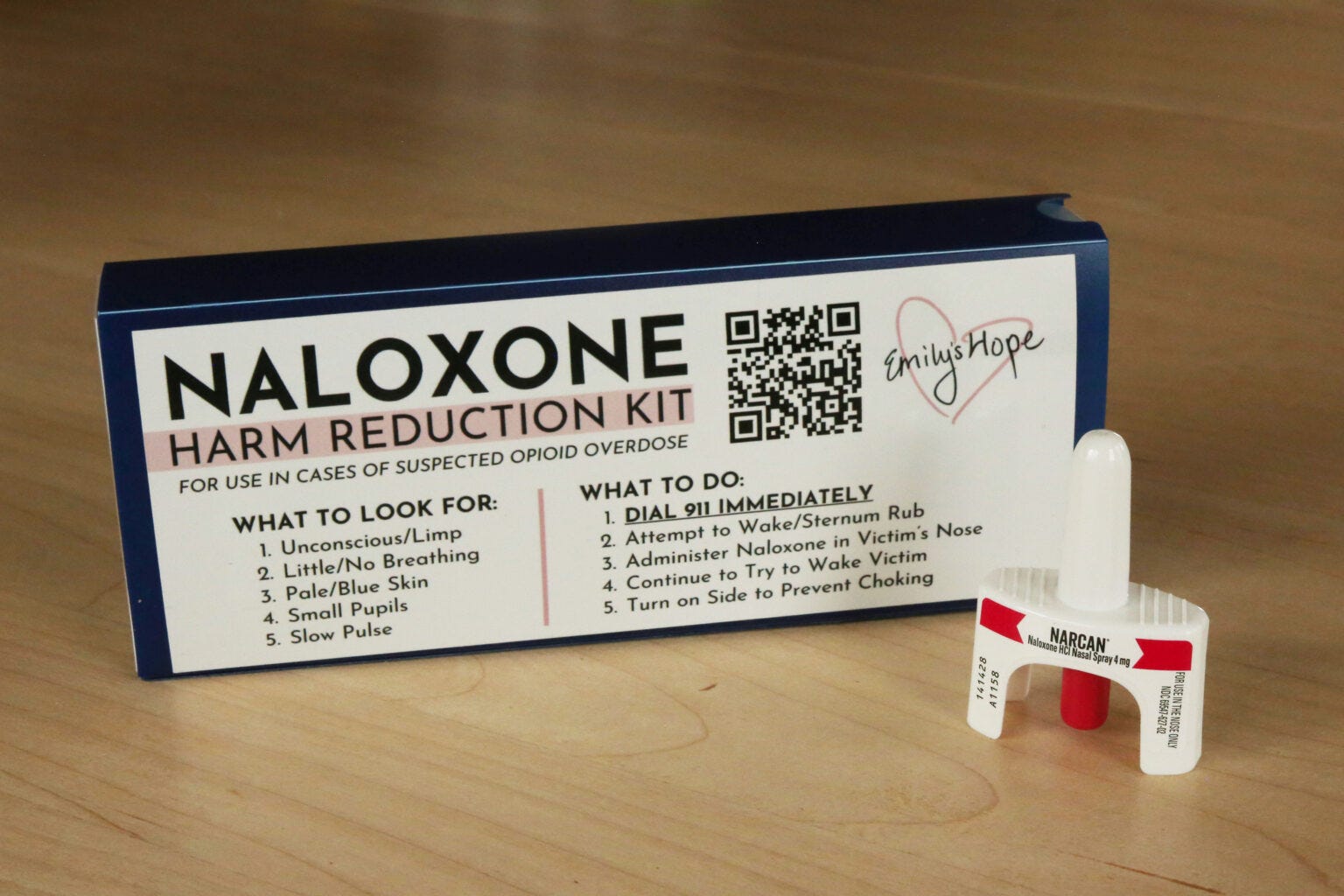
When state and local governments secured over $50 billion in historic legal settlements with pharmaceutical manufacturers and distributors, the mandate was unequivocal: the money was earmarked to remediate a generational crisis by expanding addiction treatment, broadening access to life-saving medications like Naloxone, and supporting harm reduction programs.
Instead, municipal expenditure records across the country reveal that local governments are treating these remediation funds as discretionary piggy banks, converting cash meant for medical recovery into funding for automated surveillance, police hardware, and municipal payroll.
Surveillance Over Substance: The Case of Washington Township
According to municipal bill lists and public spending records analyzed by civic watchdog group WhoAreThesePeople.org, Washington Township in New Jersey has funneled tens of thousands of dollars from its National Opioid Settlement Fund directly to Flock Group Inc.
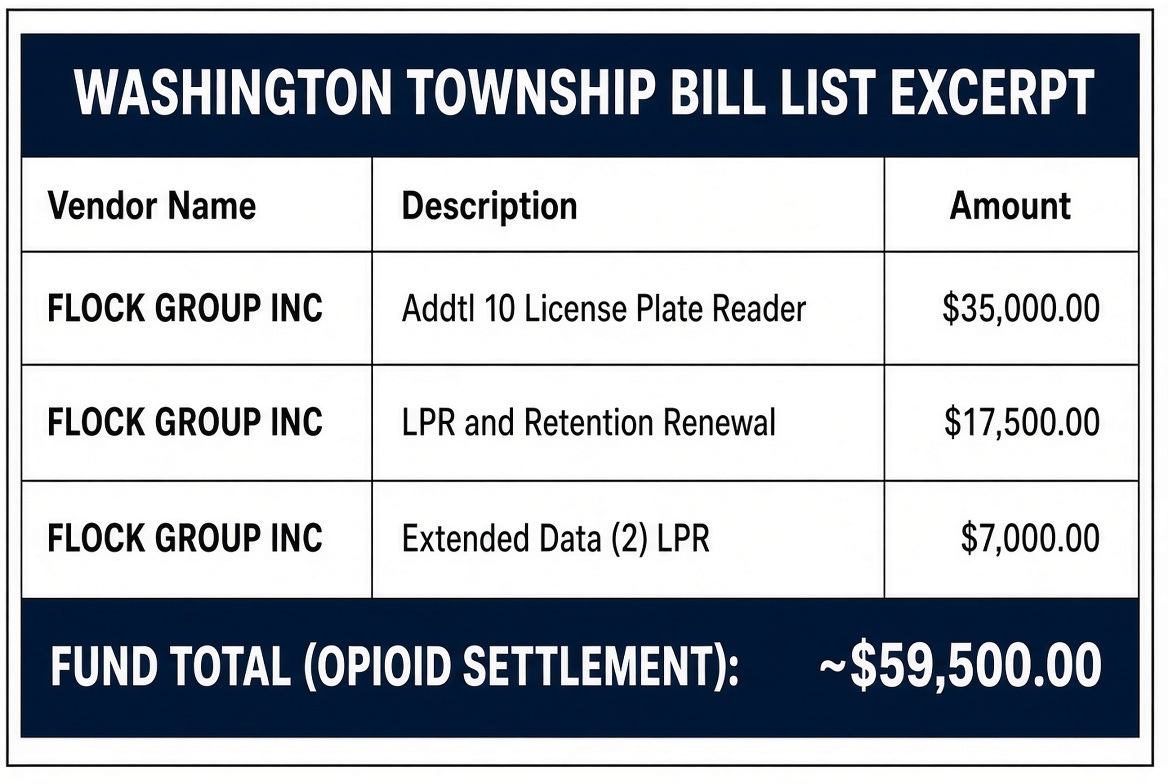
Public financial records show that between April 2025 and April 2026, Washington Township made three separate payments totaling nearly $60,000 to Flock Safety:
$35,000 allocated for an additional ten license plate reader (LPR) cameras.
$17,500 for LPR camera retention and renewal.
$7,000 for extended data retention capabilities.
All three payments were drawn from account line G-02-41-706-000-730, explicitly labeled under the National Opioid Settlement Fund. When asked to document public engagement efforts for these spending decisions, Washington Township cited participation in National Night Out, feedback gathered via the police department’s
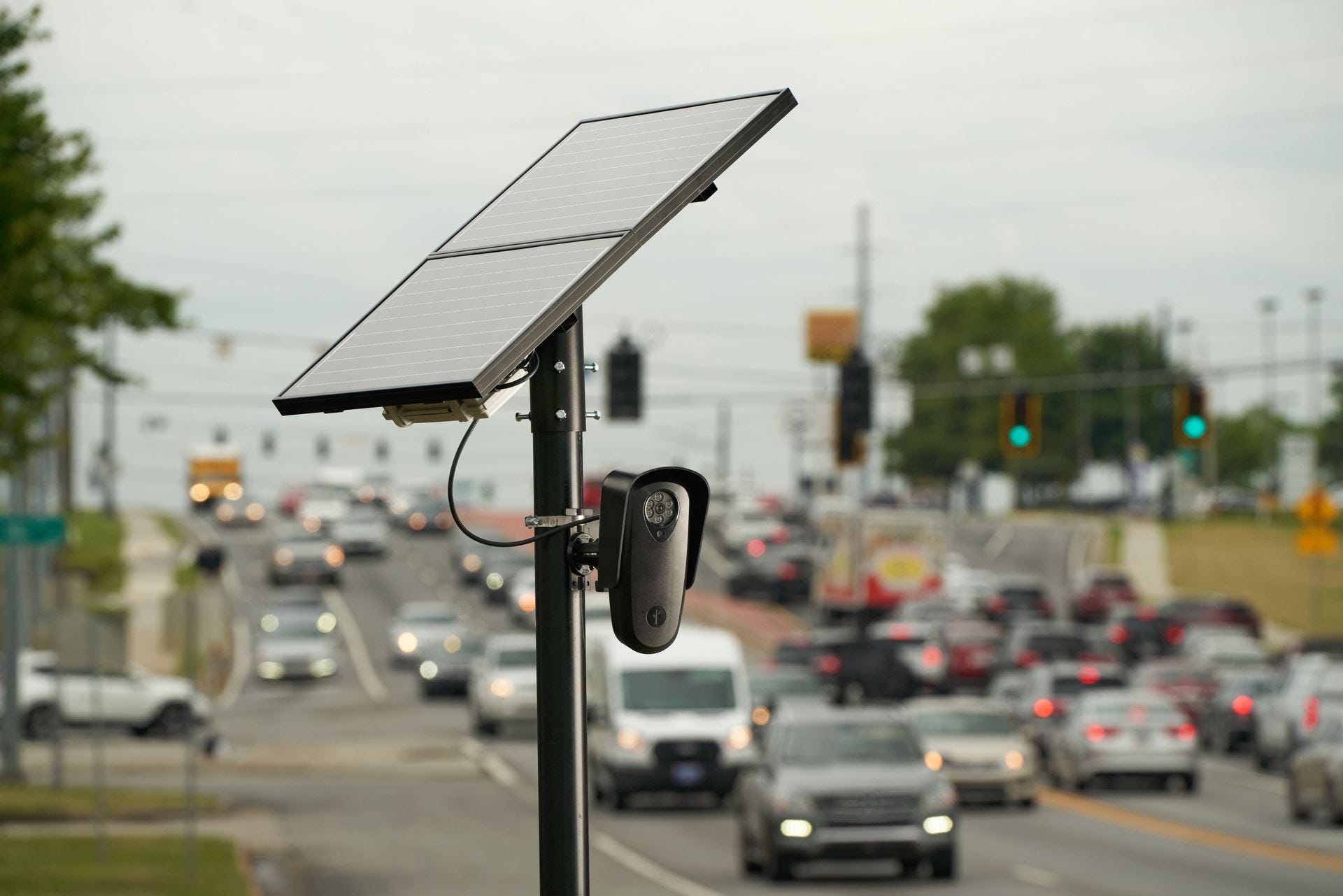
Flock Safety cameras capture real-time license plate data and vehicle characteristics, storing location logs in nationwide law enforcement networks. While municipal leaders frequently justify automated license plate readers under the umbrella of narcotics enforcement, public health experts emphasize that tracking vehicle movements fails to provide clinical treatment, mitigate overdose deaths, or expand recovery infrastructure.
A Regional Pattern: Gloucester County’s Settlement Spending
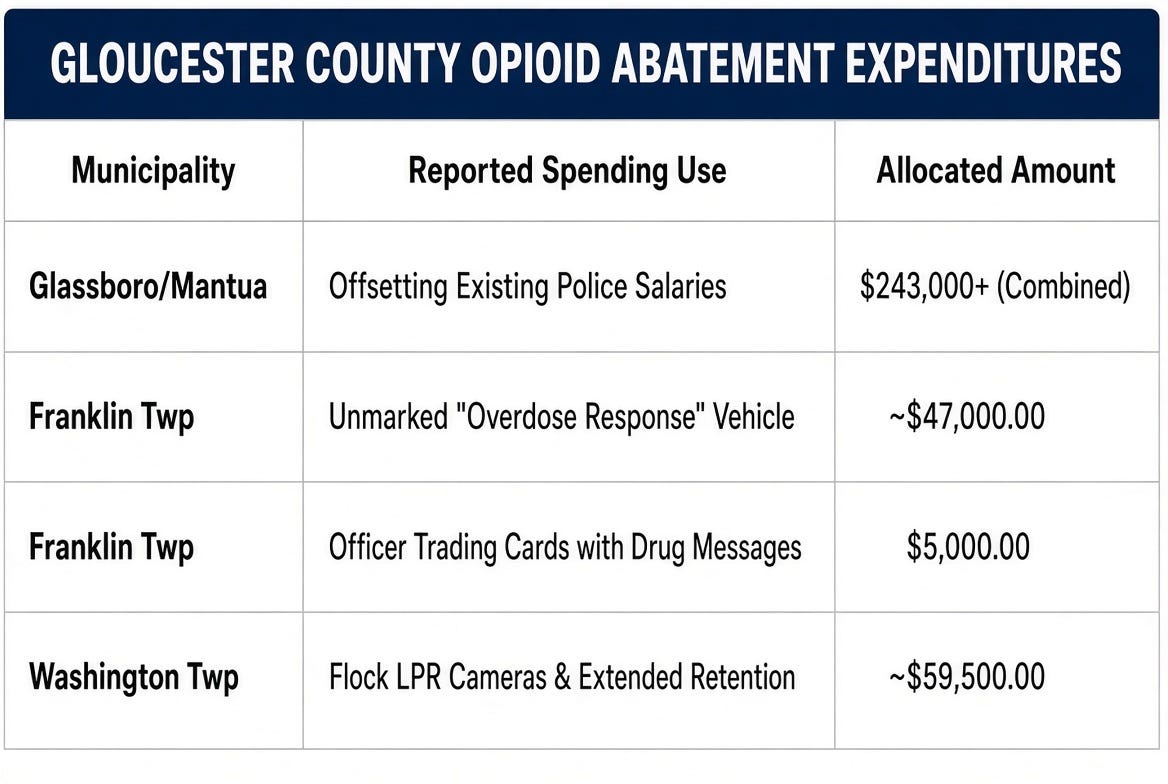
Washington Township’s surveillance expenditures reflect a broader trend across Gloucester County, New Jersey. An examination of the 2025 Gloucester County Opioid Abatement Report reveals several municipalities routing settlement funds into general police operations and law enforcement marketing rather than evidence-based medical interventions:
Glassboro and Mantua Townships: Directed 100% of their annual opioid abatement allocations—totaling over $243,000 combined—toward offsetting existing police salaries and wages rather than funding new clinical or community services. When prompted on state reporting forms for evidence-based justifications, both municipalities responded with “Not Applicable.”
Franklin Township: Expended nearly $47,000 on an unmarked police vehicle, cataloged under “treatment” on the justification that officers in plainclothes vehicles offer privacy when transporting individuals to care. Franklin Township allocated an additional $5,000 to produce custom police trading cards featuring officer photos and drug awareness slogans.
The National Scope: Drones, Tasers, and Suppressors
The diversion of settlement money away from public health is a national phenomenon. A nationwide analysis by KFF Health News, alongside researchers from Johns Hopkins Bloomberg School of Public Health and Shatterproof, identified more than $61 million in settlement funds routed into law enforcement line items within a single reporting cycle.
Across the United States, local governments have approved settlement expenditures for hardware and police operations:
Sunnyside, Washington: Authorized a one-year lease for a mobile Flock camera security trailer and law enforcement training software using opioid settlement funds.
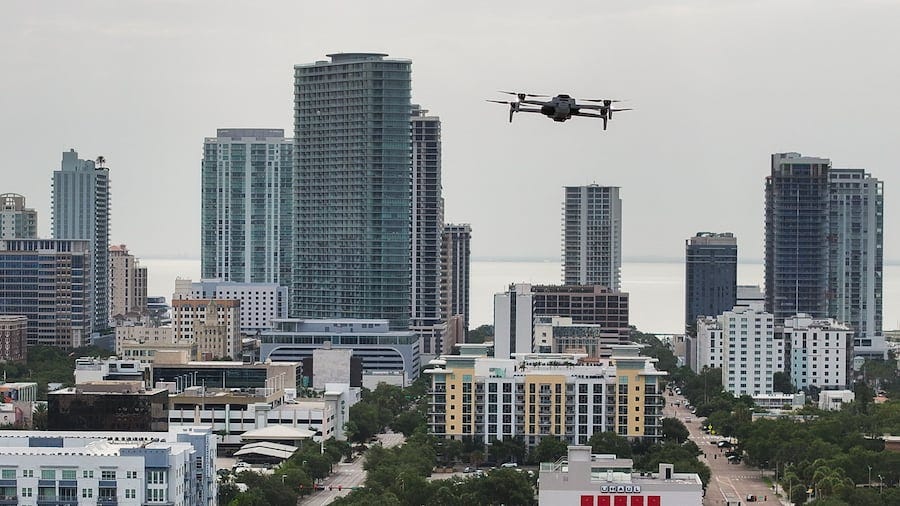
Oak Hill, West Virginia: Allocated over $67,000 in settlement money to purchase police surveillance cameras and aerial drones.
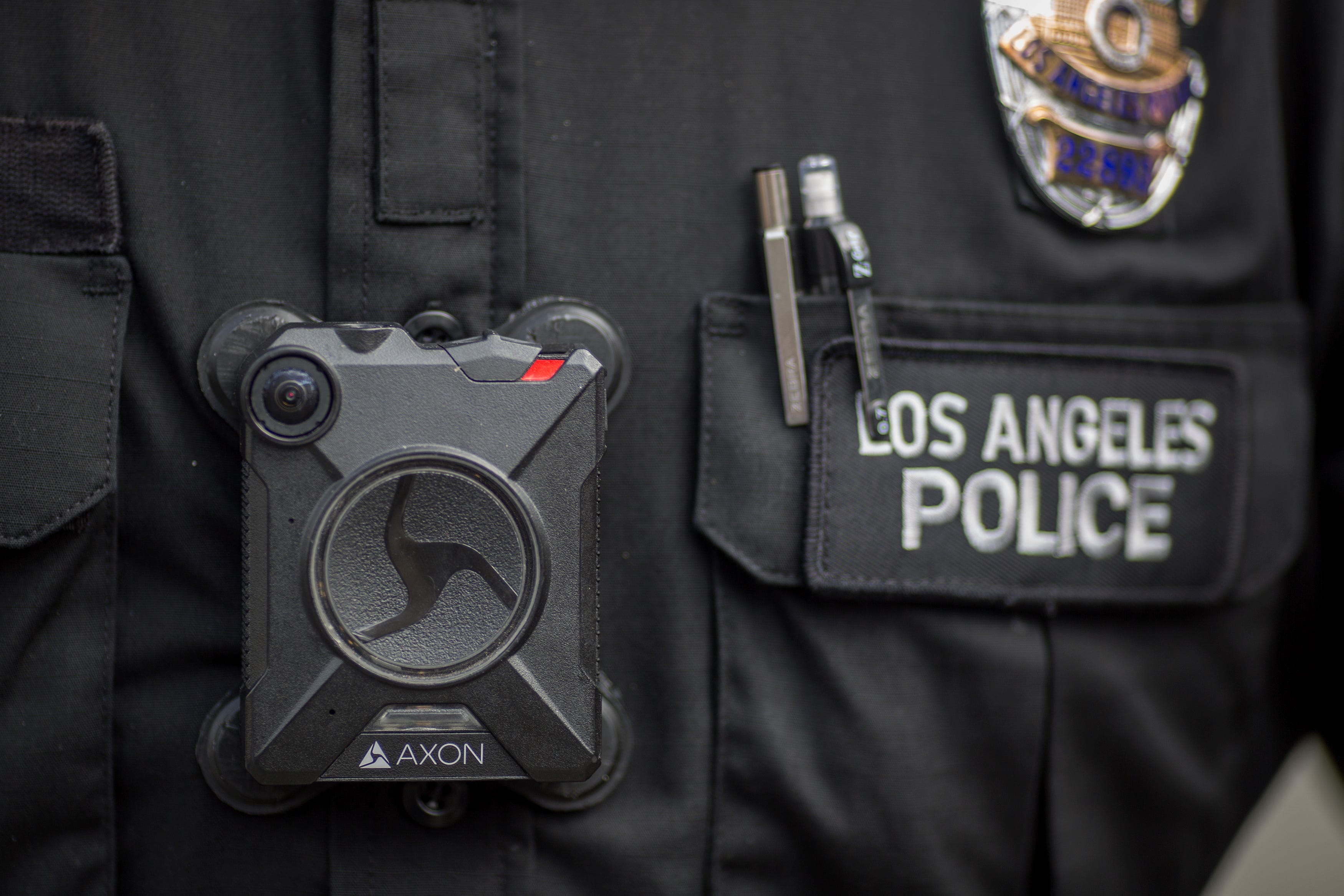
Hardy County, West Virginia: Expended tens of thousands of dollars intended for community remediation to buy police Tasers and body-worn cameras.
Clarkdale, Arizona: Approved nearly $15,000 for police drones under the classification of crime scene documentation and community outreach.
Plympton, Massachusetts: Spent roughly $4,000 to paint, tint, and letter a police department van, categorizing the vehicle under outreach.
Indiana Localities: Documented settlement funds used to buy firearm suppressors (silencers) and upgraded Tasers, prompting state officials to issue policy warnings.
Public Health Consequences and Oversight Deficits
Under national settlement agreements, at least 85% of distributed funds are designated for core abatement strategies, such as Medication-Assisted Treatment (MAT), Naloxone distribution, harm reduction infrastructure, and youth prevention.
Public health researchers warn that redirecting these funds into police surveillance and enforcement can actively exacerbate the crisis. Studies show that intensified police surveillance and drug interdiction often deter individuals experiencing addiction from seeking medical care or calling emergency services during an overdose out of fear of criminal justice involvement.
While states like Massachusetts have established public, town-by-town tracking dashboards to maintain transparent accounting of settlement dollars, many states lack centralized oversight mechanisms. Without strict enforcement of settlement guidelines, funds awarded to account for loss of life are increasingly diverted into municipal surveillance networks and police department hardware.


