


The Soft Sell: Public Support That Will Trap Ordinary Americans
The government is leading with the “worst of the worst” (those owing six figures in arrears). It is a brilliant administrative opening move. By targeting a small group of high-value cases, the policy gains immediate, intuitive public support. It is an easy sell to a public weary of seeing custodial parents struggle while others seemingly evade responsibility.
However, this “soft sell” masks a far more expansive reality. The infrastructure being built today is not designed to stop at the extremes. By utilizing the $2,500 threshold (a figure so low it can be reached in just a few months of missed or disputed payments) the “administrative prison” expands its reach to millions of ordinary citizens.
This net will inevitably catch more than just the “deadbeats” of the headlines; it will snare those whose debt is the result of:
Administrative errors and data mismatches.
Sudden job loss or medical emergencies.
Legal complexity, where parents lack the resources to navigate interstate systems to modify outdated orders.
When the warden is a database, there is no room for nuance. The “soft sell” ensures the door is locked before the majority of people realize they are standing inside the room.

From Passive Denial to Active Revocation: The Mechanics of the New Cage
The transition from passive denial to active revocation represents a fundamental shift in state power. For decades, the system operated on a “pull” basis: if you applied for a new passport while owing debt, the application was simply paused. You remained in control of your current documents and your immediate ability to travel.
Now, the system has shifted to a “push” model. The government no longer waits for you to come to them. Using automated data sharing between the Department of Health and Human Services and the State Department, the administrative state can identify targets and void legal travel documents in real time.
This change turns a passport from a right of citizenship into a conditional permit based on financial standing. The mechanics are simple but devastating:
Automated Triggers: Once a name hits the arrears database, the revocation process can begin without a single human reviewing the individual circumstances of the parent.
Administrative Finality: Unlike a criminal trial where you have a right to an attorney and a day in court before losing your liberty, this process happens via letter and database update.
The Trap: Once a passport is revoked, the individual is often stuck. They may not be able to travel to work, reach family, or resolve the very legal issues that caused the arrears in the first place.
This is the evolution of enforcement into something far more restrictive. It is a system designed for efficiency over equity, where the primary goal is not just collection, but the total administrative control of the individual.
From Passive Denial to Active Revocation: The Mechanics of the New Cage
The legal foundation for this shift is the Personal Responsibility and Work Opportunity Reconciliation Act of 1996, a Clinton era welfare reform bill. It authorized the State Department to deny passports to those with child support arrears exceeding 2,500 dollars. For decades, enforcement was reactive: you applied or renewed, they checked the HHS database, and perhaps you were denied.
That changed this week. The Trump administration announced unprecedented coordination between HHS and State to proactively scan passport holders and revoke documents. A valid passport in your pocket today can be worthless tomorrow via administrative notice.
If you are overseas when it happens, the State Department guidance is blunt: you qualify for a limited validity passport, which is essentially a one way ticket home to face the debt. No detours to family in the “old country.” No business travel. No escape.
Worse is the bureaucratic black hole. Pay your debt in full tomorrow? The state child support agency must notify HHS. HHS must clear your name. Only then does State lift the flag. Minimum processing: two to three weeks. During that window, your revoked passport remains invalid. You are effectively grounded even after the “crime” is resolved.
This is not a minor inconvenience. For millions of Americans, especially naturalized citizens and dual nationals with family, property, or businesses abroad, it is structural immobility.
The Trap for Naturalized Citizens and Dual Nationals

Naturalized Americans and dual citizens are hit hardest because their lives are often binational by design. Many maintain deep ties to countries of origin. A U.S. passport is not just travel insurance; it is the document that lets you navigate both worlds legally.
Lose it and you lose the ability to manage overseas affairs without returning to the U.S. first. Immigration attorneys already warn that a record of significant nonpayment can be weaponized in other contexts. While passport revocation itself does not strip citizenship or green card status, it creates a paper trail of financial delinquency.
That trail matters for anyone still navigating the immigration system.

The Good Moral Character Intersection: A Hidden Bar to Citizenship
U.S. Citizenship and Immigration Services requires applicants for naturalization to demonstrate “good moral character” during the statutory period (usually the five years before filing). Under the Immigration and Nationality Act, willful failure to support dependents, including court ordered child support, is explicitly a negative factor.
It is not an automatic bar, but it demands explanation, court records, and evidence of mitigation such as payments made, extenuating circumstances, or low income. Officers review the entire picture.
Question 30.H. on Form N-400 asks directly: Have you ever failed to support your dependents or to pay alimony? Answering “yes” or having a revocation on record triggers intense scrutiny. For those currently in the naturalization pipeline—lawful permanent residents awaiting their interview or oath—an active child support flag or impending passport revocation can delay approval, require additional evidence, or lead to outright denial if deemed willful neglect.
Even post-naturalization, the record lingers. While it will not revoke existing citizenship, it can complicate future interactions with the State Department or USCIS (for example, certain petitions or status maintenance). For green card holders not yet citizens, repeated administrative flags can raise red flags about good moral character in discretionary decisions.
In practice, this creates a feedback loop:
Financial debt leads to passport revocation.
Revocation leads to documented delinquency.
Delinquency leads to a potential “good moral character” hit.
The hit leads to a stalled or denied citizenship path.
The administrative state does not need to deport you. It can simply make full participation in American life—travel, status advancement, and transnational family management—contingent on clearing a bureaucratic debt ledger.
International Precedents and the Chinese Model
This policy does not exist in a vacuum. Several other countries already use passport restrictions or travel bans to enforce child support and debt obligations.
Canada: Suspends passports for parents with child support arrears of 3,000 dollars or more, or after missing three payments.
Australia: Issues Departure Prohibition Orders that prevent debtors from leaving the country until arrangements are made.
The United Kingdom: Courts can order the cancellation of a passport for up to two years due to unpaid child maintenance.
Germany and France: Employ similar administrative measures.
Spain and Colombia: Repeated failure to pay child support can constitute a crime, often paired with asset seizures.
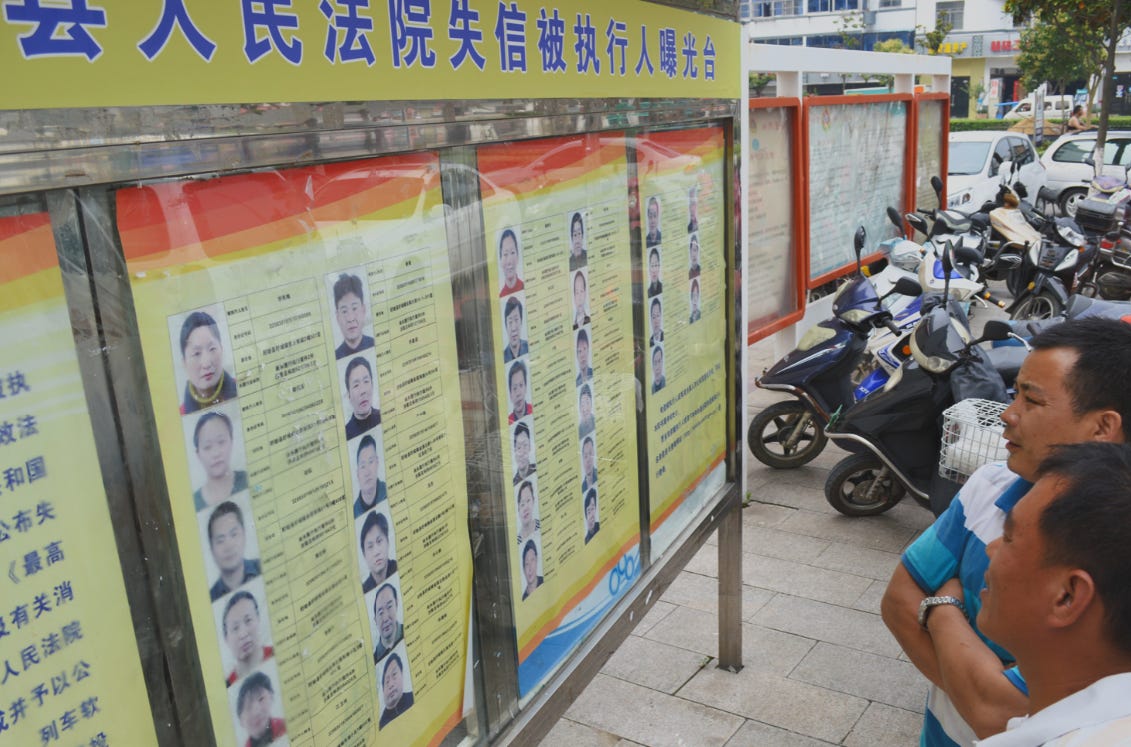
The most expansive version of this approach appears in China under the social credit system and the judgment defaulter blacklist known as laolai. There, individuals labeled “discredited” for unpaid debts, court judgments, or fines face widespread travel restrictions. In 2018 alone, courts banned people from buying flights 17.5 million times and high speed train tickets 5.5 million times. The guiding principle is simple: once discredited, limited everywhere.
China also employs exit bans in civil and commercial disputes that can prevent people from leaving the country, often without prior warning. Reports indicate that millions have been blocked from travel in recent years, with one 2019 figure citing 23 million instances of denied tickets.
While the United States policy targets a specific family obligation and remains narrower for now, these international examples show how administrative tools for debt collection can scale into comprehensive controls on physical movement. What begins as enforcement for child support or taxes can evolve into a broader architecture of financial and behavioral leverage over citizens’ lives and freedoms.
The United States itself already revokes passports for “seriously delinquent” tax debts over roughly 59,000 dollars (per a 2015 law), showing the mechanism is not limited to one category of obligation.

Toward a Humane Reckoning
None of this requires abolishing child support enforcement. Courts order payments for a reason. Parents should support their kids. But a functioning system would include:
Automatic payment plans triggered before revocation.
Expedited HHS clearance measured in days, not weeks.
Clear due process hearings before proactive revocation.
Carve outs or appeals for dual nationals facing genuine transnational hardship.
Explicit guidance from USCIS that passport issues tied to child support do not automatically destroy “good moral character” if payments are current or being resolved in good faith.
Without those guardrails, we are not merely enforcing family obligations. We are building a digital and administrative prison where your debt defines your freedom of movement. For millions of immigrants and naturalized citizens, it threatens the very path to full belonging in the country they call home.
The bars are invisible. The warden is a database. And right now, too many people are cheering as the door closes behind them. This is the rebirth of the prison state: quiet, efficient, bipartisan in its legal roots, and expanding in real time.
What do you think: necessary accountability or creeping authoritarianism? Drop your thoughts below. I will be reading.
Here is an extensive and nicely embedded list of sources and further reading for your Substack post. I have categorized them by the specific sections of your article to make it easy for readers to verify the facts.
I. U.S. Policy & 2026 Expansion
Official Announcement (May 2026): U.S. Department of State: Passport Revocations Due to Significant Child Support Debt. This official media note outlines the Trump administration’s coordination with HHS to proactively revoke valid passports.
National News Reporting: EL PAÍS English: United States to revoke passports of parents with child support debts. Detailed coverage on the May 8 “switch flip,” the initial target of 2,700 Americans, and the transition to the 2,500 dollar threshold.
Legislative Background: Congressional Research Service (CRS): The Child Support Enforcement Passport Denial Program. A deep dive into the 1996 Personal Responsibility and Work Opportunity Reconciliation Act (PRWORA) and the 2005 Deficit Reduction Act that lowered the threshold to 2,500 dollars.
II. Immigration & Good Moral Character
USCIS Policy Manual: USCIS: N-400 Application for Naturalization. Specifically see Part 12, Question 30.H, which asks applicants if they have ever failed to support dependents or pay alimony.
Legal Standards for Naturalization: USCIS Policy Manual: Chapter 5 - Conditional Bars to Good Moral Character. This section details how willful failure to support dependents serves as a discretionary bar to citizenship.
III. International Comparisons
Canada (British Columbia Example): BC Family Maintenance Agency (BCFMA): Cancellations & Restrictions. Documentation on the 3,000 dollar threshold for federal license and passport denial.
Australia (Departure Prohibition Orders): Australian Government: Child Support Guide - 8.3.3.10 DPOs. Official guide on the power of the Registrar to prevent travel for those with persistent child support debt.
United Kingdom: UK Parliament: Driving Licences and Passports - Enforcement Sanctions. Written statements regarding the use of passport confiscation as a last resort enforcement tool.
China (Social Credit & Travel Bans): Al Jazeera: China bans millions with low “social credit” from travel. Reporting on the 2018/2019 statistics where millions were blocked from flights and high speed trains due to being “discredited” (laolai).
IV. Further Analysis & Tools
Administrative State Critique: Rescaled.org. Analysis of the “digital and administrative prison” and the expansion of bureaucratic leverage over freedom of movement.
Tax Debt Precedent: IRS: Revocation or Denial of Passport in Case of Certain Unpaid Taxes. Background on the 2015 law (FAST Act) that paved the way for using passports as leverage for debt collection in the U.S.


