

The gravel pit isn’t just an image.
It’s a recurring motif in Noem’s own memoir, No Going Back, where she describes driving her 14-month-old wirehaired pointer, Cricket, to a gravel pit on her South Dakota property and shooting the dog because it was difficult to train, had poor hunting instincts, and had attacked a neighbor’s chickens. She then shot a “smelly” male goat the same afternoon for similarly vague behavioral reasons.
The detail she chose to highlight and publish was not the act itself but her framing of it as decisive leadership. The willingness to do “unpleasant tasks.” The political calculus backfired catastrophically. The story became a Rorschach test: not just for her judgment, but for her entire governing philosophy. Identify the problem. Skip the investment. Eliminate it.
That philosophy, critics argue, is now being applied at the scale of the Department of Homeland Security.

DHS Devolved: The Structural Collapse
When Noem took over DHS, the department was already strained. What critics and now at least one Republican senator describe as happening under her tenure is not mere disorganization - it’s devolvement of institutional function.
DHS is not a single agency. It is a parent body overseeing FEMA, ICE, CBP, the Secret Service, TSA, USCIS, the Coast Guard, and others. Coordinating these requires experienced deputies, clear chains of command, and delegated authority. What has reportedly emerged instead is centralization of micro-decisions at the top combined with vacuum at the operational level - a particularly dangerous combination during active disasters and enforcement surges simultaneously.
The result: chaotic. Lethal. Unaccountable. Three words that carry specific weight when applied to a cabinet-level department.
Senate Judiciary: Tillis Eviscerates
Senator Thom Tillis of North Carolina - a Republican - used his time during Noem’s Senate Judiciary Committee testimony not to offer softball but to systematically dismantle her credibility. This is notable. Republican senators breaking publicly with their own administration’s cabinet picks is not common, and Tillis’s language was not hedged.
His critique centered on two overlapping failures:
FEMA and North Carolina Hurricane Helene devastated Western North Carolina. The recovery has been described as paralyzed. At the heart of the paralysis: a reported requirement that Noem herself personally approve any FEMA expenditure over $100,000. In disaster recovery, where communities need rapid deployment of funds for housing, infrastructure, debris removal, and emergency services, a single-approval bottleneck at the Secretary level is not a management style - it is a functional blockade.
Communities waited. And waited. Tillis represents those communities. He heard from them. He came to the hearing armed.

How Helene devastated western North Carolina and left communities in ruins | CNN
His verdict: Tillis did not mince it. He called the situation a disaster and said Noem should resign. A sitting Republican senator, calling for the resignation of a cabinet secretary from his own party’s administration, in open testimony, on the record. That is not a minor editorial note. That is a rupture.
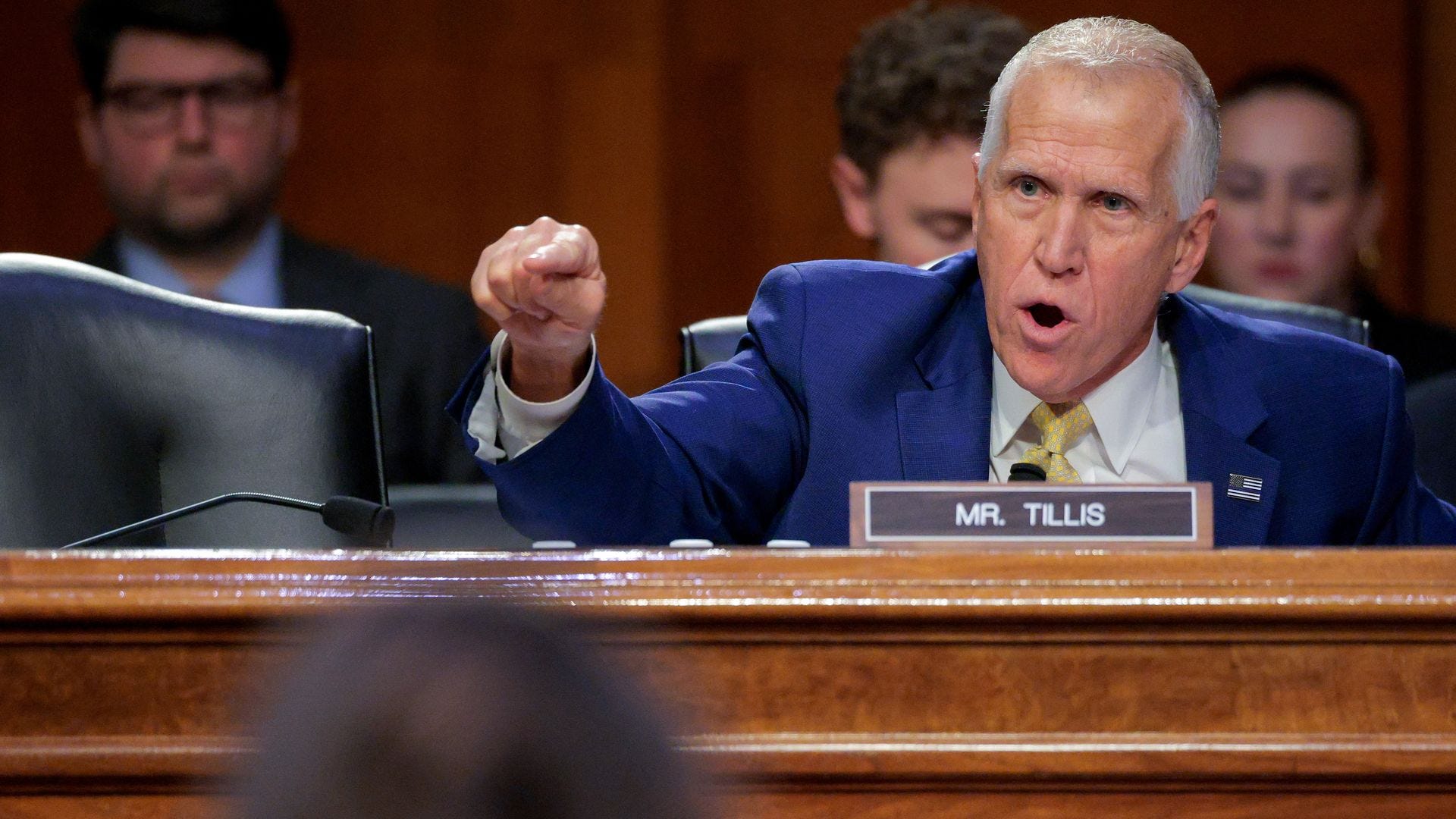
Tillis skewers Noem over DHS’s lack of responsiveness
ICE: Quotas, Numbers, and the Minneapolis Botch
Stephen Miller, the administration’s chief architect of immigration enforcement, reportedly pushed numerical arrest quotas onto ICE field operations. The framing inside the administration, according to reporting, was numbers as optics - demonstrating enforcement volume to the public and to the President - rather than numbers as the output of targeted, lawful enforcement operations.
The distinction matters enormously in practice. When agents are told to hit a number rather than a target list, the margin for error - and for sweeping up people who should not be swept up - expands dramatically.
Minneapolis became the clearest public case. In a series of operations, U.S. citizens were detained. Not undocumented immigrants. Not people with criminal records. Citizens. The names Renee Good and Alex Pretti became attached to documented cases of wrongful detention - people caught in operations designed for volume, not precision. In at least one case, the outcome was lethal.
Noem’s response, under questioning, was to label operations successful before the facts of what had happened were even established publicly. When pressed, she deflected. When the OIG letter surfaced - documenting ten specific instances in which she had misled oversight investigators or blocked their access - she stonewalled.
The OIG (Office of Inspector General) letter was not a leak or an allegation. It was a formal letter from the department’s own internal watchdog, now public, listing ten instances. That document is the evidentiary floor of Tillis’s resignation demand.

2,000 federal agents sent to Minneapolis area to carry out ‘largest immigration operation ever,’ ICE says | PBS News
The Pattern: South Dakota as Blueprint and Warning
The gravel pit is not an isolated anecdote. It fits a documented governing pattern:

COVID / South Dakota

South Dakota under Noem had among the highest per-capita COVID mortality rates in the nation at multiple points during the pandemic. Noem refused masking mandates, capacity restrictions, and other mitigation measures, framing the policy as freedom. The spin was politically effective nationally. The mortality data in South Dakota told a different story. The gap between the narrative and the outcome was never closed - it was simply repeated louder.
Tribal Nations

Nine sovereign tribal nations operate within South Dakota’s borders. During the pandemic, several attempted to set up highway checkpoints on roads running through reservation land to protect their populations - populations with historically elevated vulnerability to respiratory illness. Noem attempted to use state and legal pressure to force the checkpoints down, characterizing tribal leadership as obstructionist. The federal government ultimately sided with the tribes. The episode became a case study in Noem using cartel smear language and public narrative to delegitimize Indigenous governance.
No-bid contracts / PR spend

During her tenure as governor, reporting surfaced on the use of public funds for no-bid public relations contracts - money spent on image-building operations, some of which benefited Noem’s national political profile. The self-enrichment allegation is not fully adjudicated, but the pattern of directing public resources toward personal political brand construction is documented.
The Philosophical Core
The notes compress a governing philosophy into a few brutal lines:
Untrained creature. Shoot it. Disagree. Banish it. Quota demand. Tear through it.
Applied to a dog: controversial but contained. Applied to FEMA disaster response: communities drown. Applied to ICE enforcement: citizens get swept. Applied to oversight investigators: ten documented instances of obstruction. Applied to tribal sovereignty: federal preemption attempted, failed, ignored in the narrative.
The pattern is not chaos in the sense of randomness. It’s chaos in the sense of a single decisive impulse applied without adequate process - and at DHS scale, without adequate process means without accountability, without accuracy, and without the ability to absorb the cost of being wrong.
Tillis’s Conclusion: And What It Means
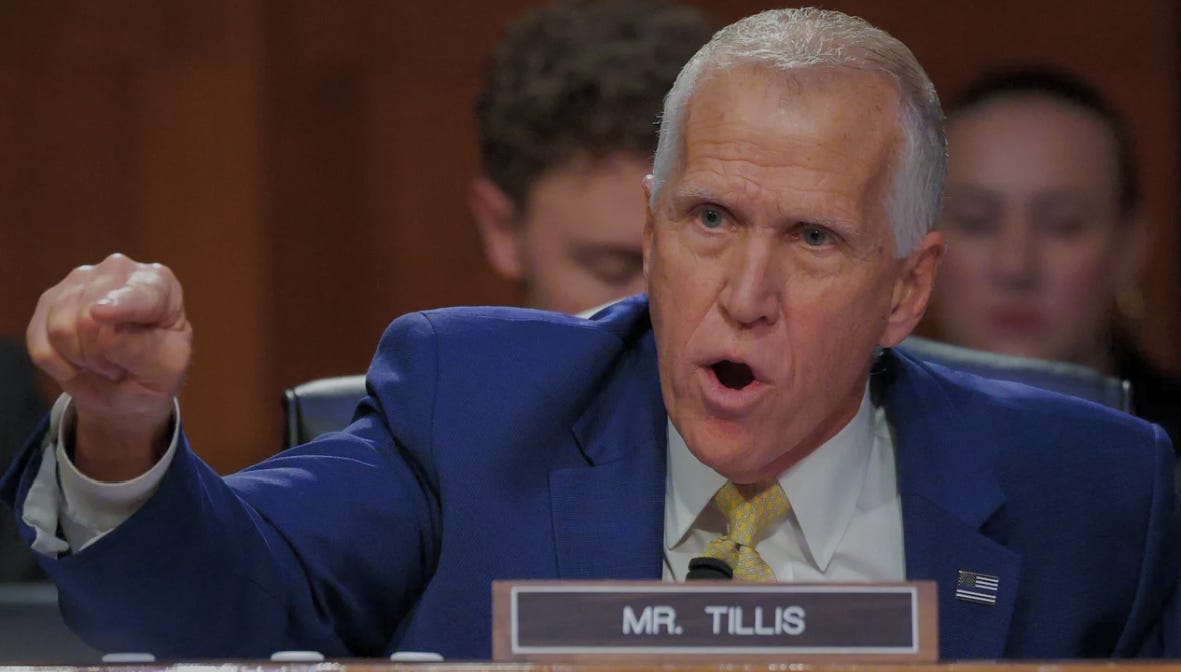
When a senator from the majority party calls for the resignation of a same-party cabinet secretary, it typically signals three things: a genuine institutional breaking point, a calculated political repositioning, or both. In Tillis’s case, the North Carolina disaster recovery failures gave him constituent cover - his voters are suffering, he can point to a specific, documentable failure, and his break is defensible at home.
But the OIG letter broadens it. Misleading oversight is not a policy disagreement. It is a structural integrity failure. Tillis’s verdict - resign - is not the opening of a negotiation. It is a closed assessment delivered publicly, on the record, by someone who has now staked his credibility on it.
The gravel pit is the image that started it. A road going nowhere, in a state governed by the woman now running the department responsible for disaster response, immigration enforcement, and domestic security, simultaneously botching all three, under an oversight letter documenting deception, with one Republican senator already publicly done.


