

The situation at the Delaney Hall ICE detention center escalated into constitutional crisis.
A battle over basic human rights. What began as a desperate plea from those inside has spilled out onto the streets, forcing a direct collision between grassroots resistance, state government, and the virtually unchecked power of federal private prison contracts.
Here is a breakdown of the mechanics behind the standoff, the disputed realities of the hunger strike, and the terrifying limits of state and local oversight.
The Economics of Incarceration: A Billion-Dollar Contract
To understand the protests happening right now, you have to understand the business model of Delaney Hall.
This isn’t a temporary holding center; it is a massive profit engine. The facility is operated by the private prison giant GEO Group under a staggering 15-year, $1 billion federal contract with the capacity to hold up to 1,000 people.
To keep overhead low and profit margins high, GEO Group relies heavily on a detainee labor program. Individuals are paid roughly $1 a day to handle essential services like kitchen operations and janitorial work. This specific economic model set the stage for the labor and hunger strike we are seeing today.
But how is Delaney Hall even operating? Back in 2021, New Jersey passed a law explicitly banning private immigration detention agreements. However, federal courts struck down the ban using the Constitutional Supremacy Clause—the doctrine that federal law supersedes state law. This allowed the federal government and GEO Group to completely bypass state-level resistance and reopen the thousand-bed center anyway.
Conditions and the Strike: A Dispute of Realities
The friction between corporate operations and human reality hit a boiling point in May 2026. Following an unannounced oversight visit, Representative LaMonica McIver amplified an SOS letter smuggled out of the facility, signed by nearly 300 detainees.
The reporting detailed harrowing allegations of extreme medical neglect and inhumane living conditions, including:
Rotten food laced with worms
An absolute lack of air conditioning
Severe, continuous medical neglect
Advocates point to the tragic death of 41-year-old Jean Wilson Brutus in December 2025 as the ultimate proof of this systemic failure. Brutus died within 24 hours of arriving at the facility. Advocates allege that GEO Group staff held an ambulance at the gates for five crucial minutes just so they could prioritize processing new arrivals.
On May 22, 2026, roughly 300 individuals launched a coordinated hunger and labor strike. Yet, the Department of Homeland Security (DHS) issued a flat denial, stating unequivocally: “There is no hunger strike at Delaney Hall.”
How can the government deny a 300-person strike? It comes down to a bureaucratic loophole. ICE internal metrics dictate that a detainee must miss nine consecutive meals—or go 72 hours without food and water—before a hunger strike officially goes on the books. Civil rights groups argue this is a calculated technicality designed to underreport protests and ignore starving people.
The Transfer Blockade on Doremus Avenue
By Memorial Day weekend, the strike had mobilized direct action on the outside. On May 24, the crisis physically spilled into the streets when ICE attempted to forcibly transfer a key organizer of the strike, Martin Soto, to a different facility in Elizabeth, New Jersey.
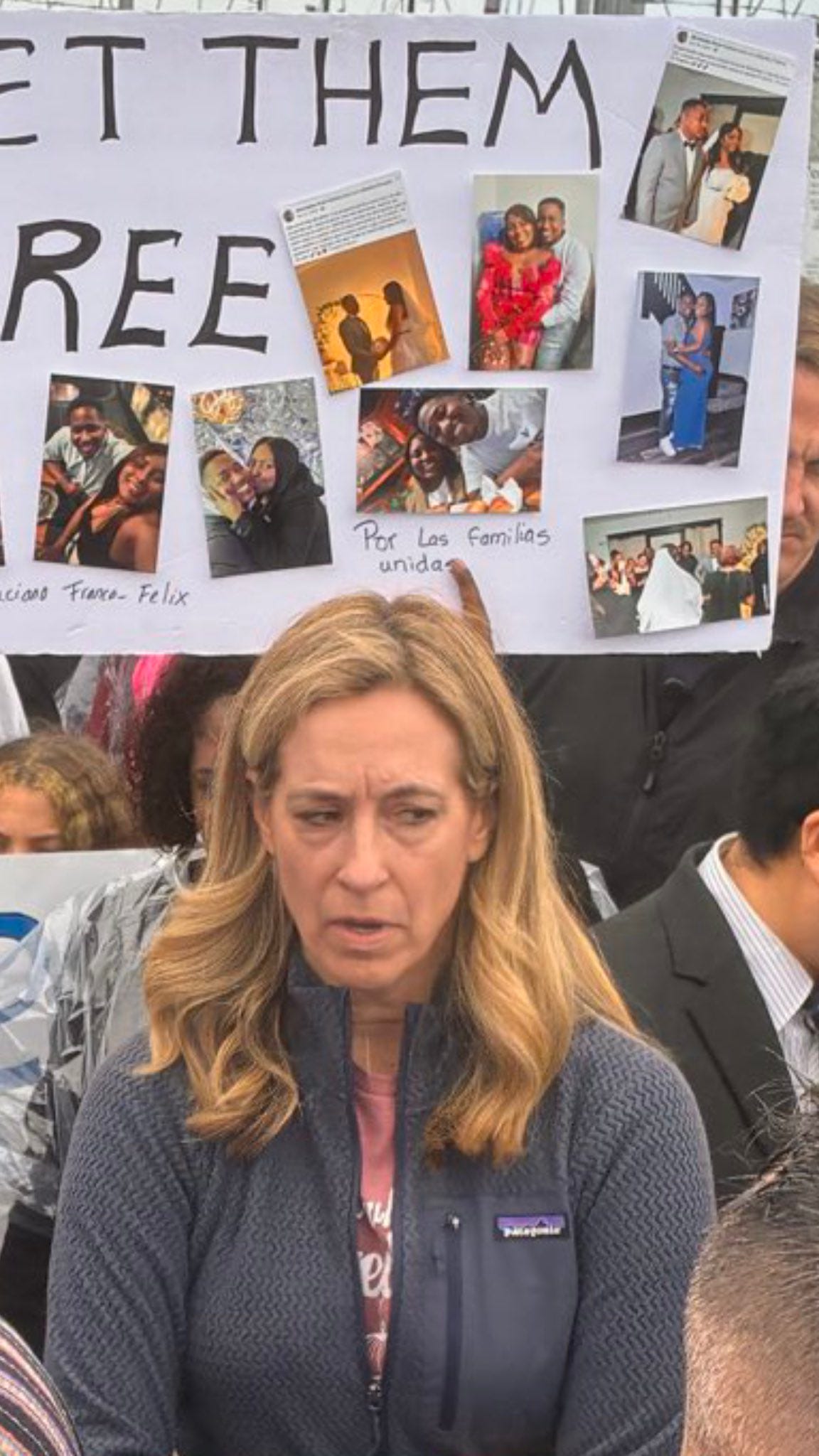
Soto’s pregnant wife, Gabriela, alerted supporters that he was being dragged into a transport van. In response, protesters put their bodies and vehicles in the way, successfully blockading the exit.
This human barricade held for hours until 1:25 AM on May 25, when ICE tactical officers and Newark Police moved in with batons and pepper spray to forcefully clear the 70+ protesters and push the transfer through. Immediately following the clash, ICE indefinitely suspended all family and legal visitation, citing “safety concerns,” effectively creating a total information blackout.
Watch the on-the-ground coverage of the protests here:
N.J. governor requests access to Delaney Hall ICE facility amid protests (CBS New York)
Protesters barricade entrance to Newark ICE detention facility (PIX11 News)
N.J. Gov. Mikie Sherrill at ICE facility Delaney Hall to join protestors (CBS New York)
The Limits of Oversight: The Jurisdictional Wall
Perhaps the most chilling aspect of the Delaney Hall crisis is the complete neutralization of local and state authorities—what legal experts are calling the “Jurisdictional Wall.”
City Level: The City of Newark sued the GEO Group to conduct basic municipal safety and health inspections. In response, city inspectors were physically locked out of the facility.
State Level: On May 25, New Jersey Governor Mikie Sherrill physically went to the gates to inspect the conditions herself. She was formally denied entry by ICE and GEO Group guards, who shielded themselves behind the Supremacy Clause.
Federal Level: The crackdown on oversight has even crossed into criminal prosecution. Representative LaMonica McIver is currently fighting a federal indictment related to an “altercation” during an unannounced inspection back in May 2025. She faces three felony counts of assaulting and impeding federal officers, carrying a potential sentence of up to 17 years in prison. McIver maintains her innocence, arguing she was just doing her legally mandated job. She is appealing to the 3rd Circuit utilizing the Speech or Debate Clause—setting up an unprecedented legal showdown over the separation of powers.
When a privatized facility operates like its own sovereign nation—superseding state laws, blocking the governor, and threatening to imprison members of Congress for inspecting it—we have to ask: Where does accountability exist?
How to Help Right Now
The advocates on the ground and the original reporting sources have been incredibly clear in their demands: Free them all. Shut down Delaney Hall.
As the public is pushed to look past the billion-dollar contracts and focus on the human lives at stake, here is what you can do immediately to support the people inside and the organizers on the ground:
Donate to Local Mutual Aid Funds: The organizations fighting this battle rely on community support. Direct your donations to the NJ Alliance for Immigrant Justice (NJAIJ) and other local Newark mutual aid funds to help cover legal fees, protest supplies, and support for the families of the detainees.
Amplify the Message: ICE relies on the information blackout to operate without scrutiny. Share this article, share the YouTube footage from the ground, and refuse to let the story disappear from the timeline.
Contact Your Representatives: Call your local, state, and federal officials. Demand that they pressure DHS to lift the visitation ban immediately, provide independent medical care to the striking individuals, and terminate the GEO Group contract.
Show Up: If you are local to the New Jersey/New York area, look for calls to action from grassroots groups. As we saw on Doremus Avenue, physical solidarity can disrupt the machine.


