

Help Single Moms in Twin Cities stay Housed #ICEOUTMN
How communities are ditching high-tech too paper, whistles, and shadows to survive the surveillance state.
A recent video report from the ground in Minneapolis paints a stark picture of a city under siege. It describes a “fully occupied” zone where the rules of engagement have shifted overnight. Agents are no longer knocking; they are breaking down doors and smashing windows. Helicopters and drones have become the soundtrack of daily life.
But amidst this crackdown, something else is happening. The community is not just hiding; they are adapting. They are abandoning the digital too track them and reviving the “analog” survival tactics of the past.
This is not paranoia; it is operational security (OpSec) distilled to its purest form.
1. The Return of “Eating the Paper”
The most chilling instruction from the video was a simple directive given to volunteers delivering food: “Write the address on paper. If you get pulled over, eat the paper.”
In an era of digital surveillance, where a single seized phone can an entire network of vulnerable people, paper is the only secure encryption. It leaves no metadata. It has no GPS history. And as the French Resistance knew well in the 1940s, it can be destroyed in seconds.
Historical Precedent: The Hollow Coin
In WWII, resistance fighters and spies used hollowed-out coins to transport microfilm and tiny scraps of paper. Like the modern instruction to “eat the paper,” this relied on physical objects that could be discarded, swallowed, or spent in an instant to destroy evidence.
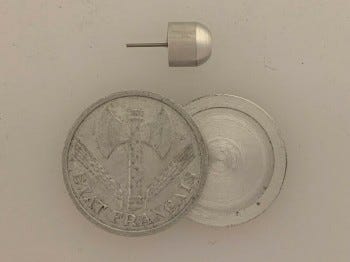
A hollowed-out coin used by spies to hide messages—a physical precursor to today’s “eat the paper” protocol.
2. The Human Warning Grid
The video reports that residents are using whistles, car alarms, and rhythmic noise to signal raids. This is a low-tech “Early Warning System” designed to strip the occupier of the element of surprise. When the digital grid is monitored, the human network lights up.
Historical Precedent: The Bicycle Scout
The Dutch Resistance relied heavily on young couriers on bicycles. They were fast, quiet, and innocuous, allowing them to move intel and warn neighborhoods right under the noses of occupiers. Today’s “whistle-blowers” in Minneapolis serve the same function: an active, human alarm system.
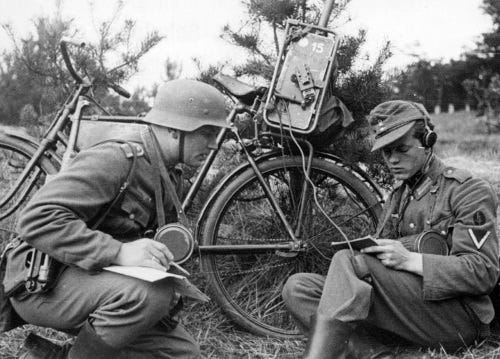
Sometimes the fastest network is a human on a bike.
3. Shadow Infrastructure (Mutual Aid)
With businesses boarded up and supply lines threatened, the video describes abandoned buildings being converted into “hubs” for food, clothing, and rent assistance. This is “Shadow Infrastructure”-building a parallel support system when the state weaponizes access to basic needs.
Historical Precedent: The Ghetto Soup Kitchen
In the Warsaw Ghetto, when the official food supply was cut off to starve the population, the community organized self-help kitchens. This was not just charity; it was a defiant act of logistical warfare against a policy of starvation.
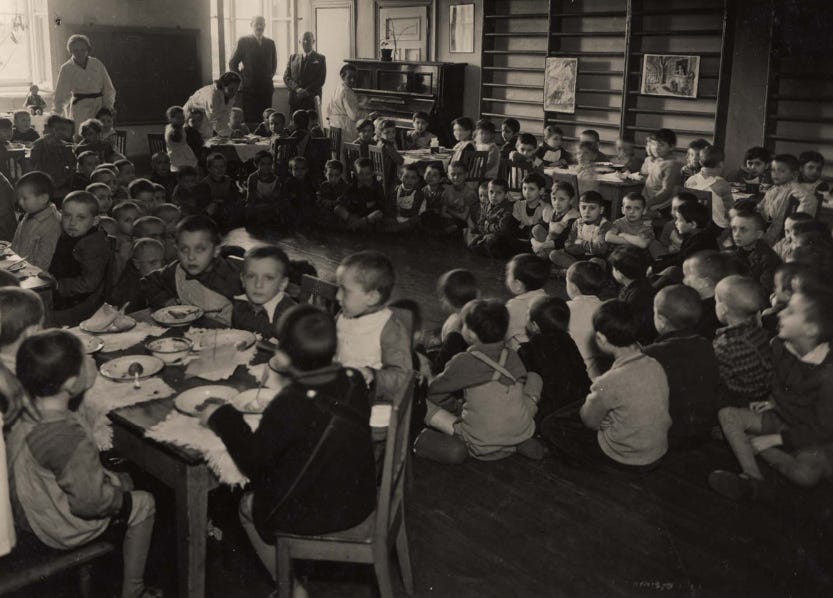
A soup kitchen in the Warsaw Ghetto, 1941. Survival is a political act.
4. Underground Knowledge
The report mentions children not attending school and people avoiding hospita response, knowledge moves underground. “Ghost clinics” open in basements, and education moves to living rooms.
Historical Precedent: The Flying University
In occupied Poland, where education was banned, the “Secret Teaching Organization” held classes in private apartments and basements, frequently changing locations to avoid detection. They proved that you can occupy a city, but you cannot occupy the mind.
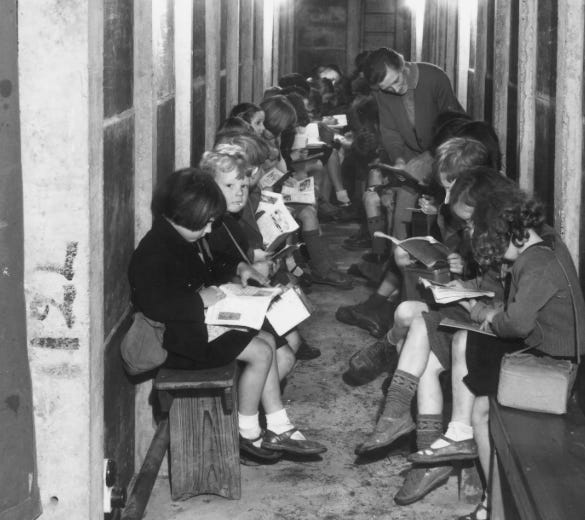
Students in a secret underground class in occupied Poland. If school closed, anywhere became the classroom.
Conclusion: Sumoud (Resilience)
The video describes the mental toll of the occupation, but also the refusal to leave. This mirrors the Palestinian concept of Sumoud (steadfastness)—the idea that simply remaining in your home, cooking dinner, and keeping your family together is a heroic act of resistance.
Historical Precedent: Routine as Resistance
During the London Blitz, milkmen continued to deliver milk over piles of rubble. This famous imagery reminds us that maintaining a routine amidst destruction is a psychological weapon. It tel occupier: “You can destroy the buildings, but you cannot stop us.”
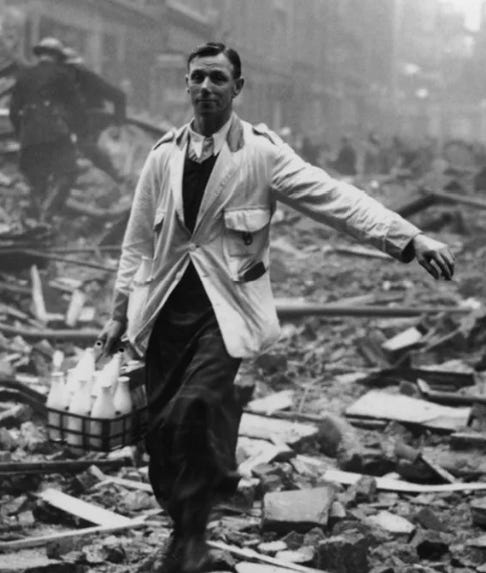
A milkman delivering milk over the rubble of London during the Blitz. Normalcy is the ultimate defiance.


